Home
About F.A.P. Seminars
Functional Anatomic Palpation Systems™ SEMINARS
What can you expect from an F.A.P.™ seminar?- Who can take F.A.P.™ seminars?
- Who needs Functional Anatomic Palpation Systems™ training?
- Are re-certification seminars required?
F.A.P.™ SEMINARS

What can you expect from an F.A.P.™ seminar?
Functional Anatomic Palpation Systems (F.A.P.)™ is a guided systematic approach to soft tissue palpation in which the practitioner delineates, feels, and then assesses specific anatomic structures. The approach is summarized by the following: "Specificity of Diagnosis = Specificity of Treatment = Specificity of Results™".
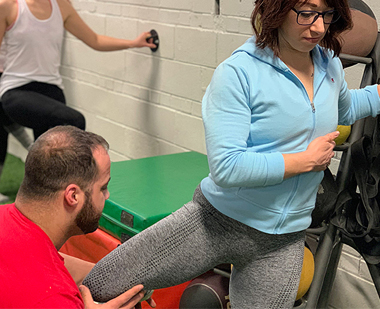
A diagnosis of 'groin sprain', for example, is subjected to further examination in order to determine the location of the lesion, be it in the adductor longus, brevis, or magnus, the pectineus, or obturator externus, each of which is accessible and distinguishable via palpation. F.A.P.™ offers advanced instruction in soft tissue palpation to chiropractors, physicians, physiotherapists, massage therapists, osteopaths, acupuncturists, and athletic therapists. In addition to hands-on palpation and discussion of treatment alternatives and current research, the training also provides a review of clinical and functional anatomy.
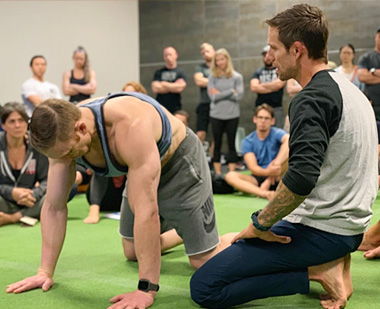
This comprehensive anatomy palpation system is divided into three seminars based on anatomic region (upper limb, lower limb, and spine). Anatomical structures are reviewed onscreen with visuals courtesy of the Primal 3D anatomy series by Primal Pictures in which overlying structures are peeled off to uncover the target muscle, ligament, or tendon. Time is allocated for participants to practice their palpatory skills. Even the best management techniques will fall short if the evaluation is not thorough enough to exactly delineate a patient'deficits. The F.A.P.™ system gives practitioners the opportunity to hone their palpatory and diagnostic skills, and this will translate into a more specific application of treatment modalities.
Who can take F.A.P.™ seminars?
Functional Anatomic Palpation Systems™ seminar series are available to any and all manual practitioners and health and fitness professionals who would benefit from improved knowledge of functional anatomy and soft tissue palpation. This would include professionals such as, but not limited to, Physiotherapists (or Physical Therapists), Chiropractors, Registered Massage Therapists, Athletic Therapists, Osteopaths, Acupuncturists, Strength and Conditioning Specialists, Personal Trainers, and Medical Doctors. There are no pre-requisites for F.A.P.™ seminars, however a strong background in anatomy is recommended. Who needs Functional Anatomic Palpation Systems™ training?
Advanced instruction in soft tissue palpation and assessment are of the utmost importance to all manual practitioners who wish to achieve both diagnostic and treatment (manual care, rehabilitation, or training) specificity. Advanced anatomy palpation skills allow practitioners to specifically locate and assess areas of anatomic dysfunction and therefore provides all of the information necessary to develop a successful and efficient treatment plan.Are re-certification seminars required?
Re-certification seminars?? … no, we are confident we will teach it right the first time
. Many people elect to attend seminars more than once to refresh their knowledge. In these circumstances, the seminar is offered at the reduced student rates.F.A.P.™ SEMINARS
Lower Limb Seminar
F.A.P.™ Lower Limb Seminars include training in palpation of specific anatomic structures of the pelvis, thigh, leg, and foot. Structures covered range from the iliopsoas, to the sacrotuberous ligament, to the obturator externus, to the flexor hallucis longus. In addition to soft tissue palpation training, functional assessment and treatment options are discussed for each and every structure covered.Auxiliary topics include discussion of current clinical research regarding the assessment and treatment of common conditions such as Iliotibial band (ITB) syndrome, Medial Tibial Stress syndrome, Sacroiliac joint dysfunction, Patellofemoral Pain syndrome, Achilles tendonopathy/tendonitis, lower limb kinetic chain dysfunction, plantar fasciitis, and many more.
Upper Limb Seminar
This seminar includes training in palpation of specific anatomic structures of the anterior thorax, shoulder, arm, forearm, and hand. Structures covered range from Pectoralis major and minor, to the quadangular space, to the Flexor Digitorum Profundus. In addition to soft tissue palpation training, functional assessment and treatment options are discussed for each and every structure covered.Auxiliary topics include discussion of current clinical research regarding the assessment and treatment of common conditions such as Subacromial Impingement, Thoracic Outlet syndrome, Scapular Dyskinesis, Carpal Tunnel syndrome, tennis elbow (lateral epicondylosis), and many more.
Spine Seminar
This seminar includes training in palpation of specific anatomic structures of the head and neck, Temporomandibular joint (TMJ), thorax, low back, and pelvis. Structures covered range from the pterygoids, to the suboccipital triangle, to the external oblique, to the gluteus minimus. In addition to soft tissue palpation training, functional assessment and treatment options are discussed for each and every structure covered.Auxiliary topics include discussion of current clinical research regarding the assessment and treatment of common conditions such as Temporomandibular Joint Disorder (TMD), Cervicogenic Headache, Spinal pain (low back pain, neck pain), Pelvic hypermobility, and many more.
Seminar Schedule
F.R. Lower Limb Toronto
Feb. 4-5 / 2012
F.A.P. Spine Toronto
Feb. 25-26 /2012
F.A.P. Upper Limb Toronto
Mar. 31-Apr. 1 / 2012
F.A.P./F.R. Upper Limb Italy
May. 24-27 / 2012
Feb. 4-5 / 2012
F.A.P. Spine Toronto
Feb. 25-26 /2012
F.A.P. Upper Limb Toronto
Mar. 31-Apr. 1 / 2012
F.A.P./F.R. Upper Limb Italy
May. 24-27 / 2012
Tentative Dates
TESTIMONIALS
"I attended a weekend seminar with the F.A.P.™ Upper Extremity System, and I was very impressed with the amount of relevant information presented, the instructors' knowledge, the time taken with the 'hands-on' palpation portion of the seminar, and its overall organization. I have been 21 years in general practice, and before I attended I thought I had a sound clinical knowledge concerning the muscles, nervous innervation, and the pathways of nerves. It was certainly apparent to me at the end of the weekend that my knowledge drastically needed updating. On Monday I was a better, more specific diagnostician, and this lead to better clinical results."
Dr. David Orchard
Chiropractor, Member of the Canadian Chiropractic Examining Board
Dr. David Orchard
Chiropractor, Member of the Canadian Chiropractic Examining Board